
Bugonia (2025)

4/10
Think of the most stupid “twist” ending Bugonia could have once you understand the setup, and that’s exactly where the filmmakers decide to go. From a movie that starts out with so much promise, Bugonia totally falls apart in the last act. Great acting from the two leads and some amusing black comedy can’t save this pretentious remake, directed by Yorgos Lanthimos and written by Will Tracy based on the 2003 South Korean film Save the Green Planet!, that winds up nonsensical even on its own terms and wallows in misanthropic doomerism.
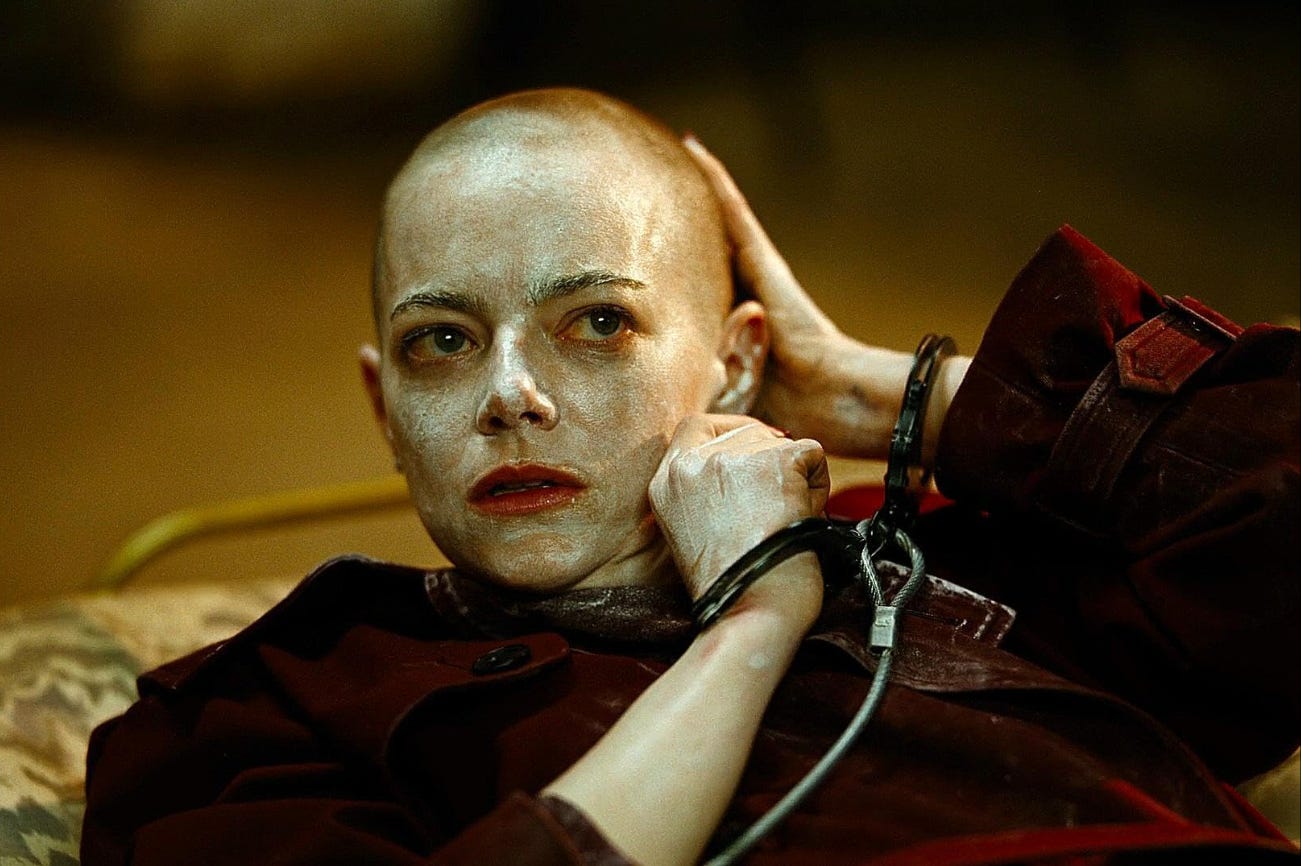
Conspiracy theorist Teddy Gatz (Jesse Plemons) and his autistic cousin Don (Aidan Delbis) kidnap Michelle Fuller (Emma Stone), CEO of the pharmaceutical giant Auxolith, and hold her captive believing she’s an alien—part of a malevolent race called the Andromedans they think is killing off honeybees and devastating communities in an effort to subjugate and enslave humanity. They give her four days to arrange a meeting with the Andromedan emperor before a lunar eclipse allows the alien mothership to enter Earth’s atmosphere undetected.
It goes without saying this plot is ripe with potential for satire and exploration of class conflict. In the absence of a revolutionary program, working class anger can find expression in all kinds of distorted ways, including conspiracy theories. Teddy might have a bizarre interpretation of reality, but his views flow from real oppression and tragedy. His mother Sandy (Alicia Silverstone) is comatose after participating in Auxolith trials for an experimental drug to treat opioid withdrawal. It’s no conspiracy theory that capitalists in the pharmaceutical industry, such as the billionaire Sackler family, created the opioid crisis that has devasted working-class communities.
The best parts of Bugonia involve Michelle’s efforts to talk her way out of the situation. Shrewdly intelligent with degrees in biochemistry and psychology, the CEO cycles through a variety of tactics: from telling Teddy and Don that their situation is hopeless and authorities will soon locate her, to playing along and claiming that she is an alien, to trying to convince weak link Don to free her.
Teddy, who we learn works at an Auxolith warehouse, has legitimate grievances, while Michelle is portrayed as a ruthless and calculating capitalist. Her most honest moment is when she briefly has the upper hand and screams, “You can't beat me because you are a loser and I'm a winner, and that's fucking life!” Yet the plot pushes audience sympathies towards the CEO, who of course sounds more rational compared to Teddy’s whacked-out conspiracy theories about aliens.
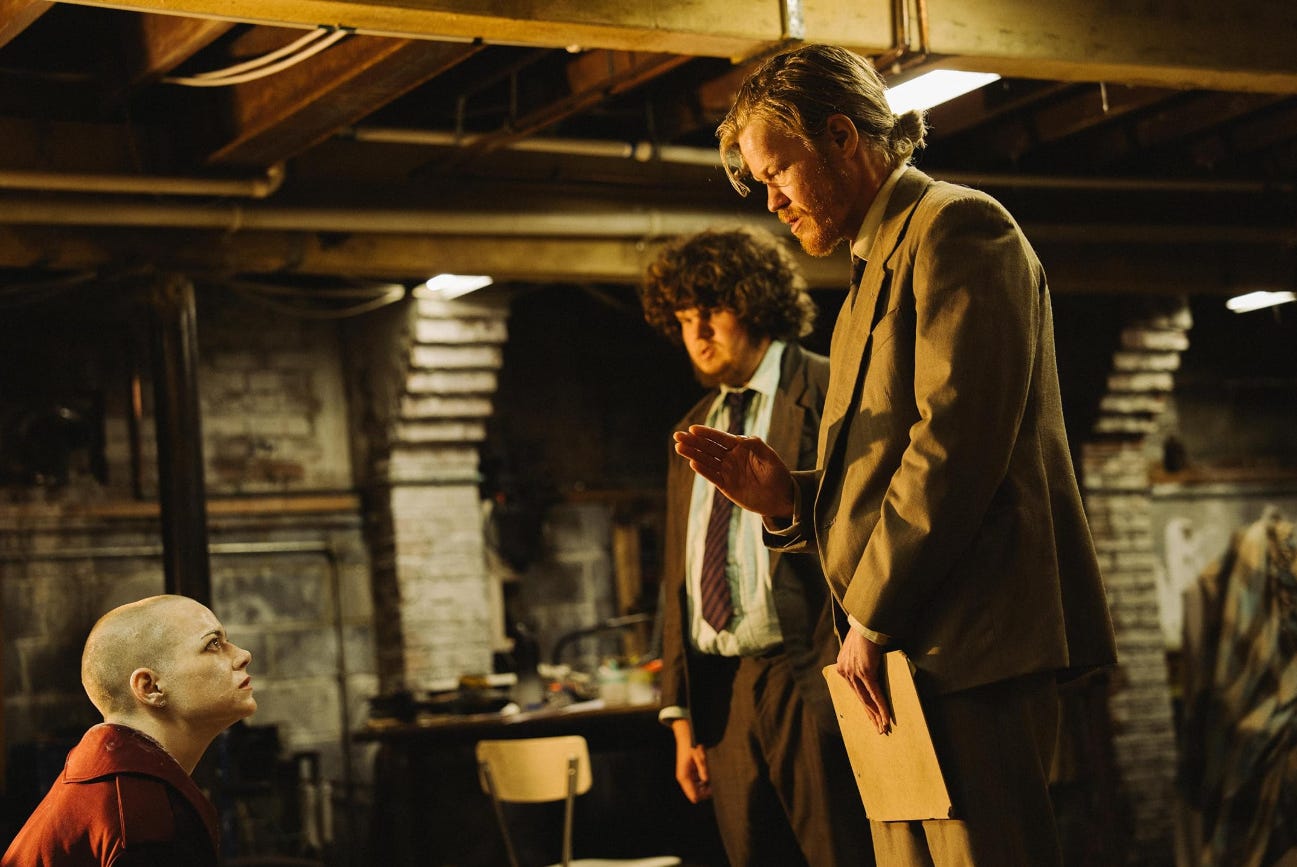
At a time of capitalist crisis and skyrocketing inequality, when billionaires are reaching unprecedented levels of wealth while workers are suffering and falling deeper into poverty, why tell this particular story? Obviously it’s topical. But by focusing on conspiracy theorists who target a CEO because they believe she’s an alien, the film paints the only workers who challenge this oppressive system in the story as stupid, crazy, and/or gullible enough to believe anything. Teddy tells Michelle at one point he tried on all kinds of ideological hats—“alt-right, ‘alt-lite’, leftist, Marxist”—before settling on his conspiracy theory of the Andromedans.
Spoilers ahead.
The fact that the CEO comes off as more rational and sympathetic in this scenario doesn’t preclude the movie from revealing truths, which is the goal of all art. Belief in conspiracy theories is a widespread phenomenon, and it’s not surprising people might turn to them in the absence of Marxist theory that can provide an accurate material explanation for their oppression. Unfortunately, Bugonia’s final act throws away any social commentary it might have offered.
After Michelle manages to break free of her shackles in Teddy’s basement, she finds a room with severed human body parts and detailed notes. When Teddy returns, she tells him she is an Andromedan and intimidates him with a lengthy exposition dump—claiming that Andromedans accidentally killed the dinosaurs, created humans in their own image, and through genome experimentation produced the current iteration of humans who are destroying themselves and Earth due to their supposed inherently violent nature.
Michelle invites to Teddy to her office at Auxolith headquarters where, she says, they will teleport to her ship in a device cleverly disguised as a closet. (Note that Michelle at this point has tricked Teddy into killing his own mother with antifreeze, but whatever.) When they arrive, Teddy reveals he’s wearing a homemade suicide vest as “insurance” in case Michelle tries to take him captive. Claiming that to initiate contact with the Andromedans she needs to input a 58-digit code on her calculator, Michelle seems to be buying time. Teddy enters the closet and the explosive vest detonates just as Michelle hits the “enter” key on her calculator. Paramedics take Michelle away in an ambulance, until she gets up and exits the vehicle.
That’s when we learn the asinine reveal: Michelle actually is an alien and Teddy’s conspiracy theory about the Andromedans is true, right down to the design of their spacecraft! The best you can say about this twist is it might be good for a laugh; maybe laughing at yourself for thinking these Oscar-nominated filmmakers knew how to end their movie on a plausible note. Michelle, revealed as the Andromedan leader, consults with her fellow Andromedans—all in ridiculous costumes and hairstyles, speaking Andromedan, sitting in a cavernous red extraterrestrial location—and says the human experiment has failed. She pops a transparent dome over a flat Earth and all humans instantly die, though not other species. The film ends with bees returning to Teddy’s apiary and pollinating a flower.

In parsing what this ending means, let’s start with the word “bugonia”, which is never mentioned in the film, much less explained. The title Bugonia refers to a Mediterranean folk belief that a bull or ox killed without bloodshed could spontaneously create bees that would emerge from the carcass. Tracy says one could interpret the title as “a metaphor for contemporary, certainly American life, or human civilization, if you wish—that there might be some opportunity or new life that could arise from the ashes of something that's quite corrupt.”
Tracy elaborates further in an interview with Inverse: “The ending of Bugonia is reckoning a little bit more with a very specific kind of political turn and hopelessness that we're feeling at the moment," he says. Noting that as “time has gone on and the climate catastrophe has felt increasingly urgent, and for some people hopeless,” Tracy says questions have arisen about humanity’s relation to Earth and trying to figure out “what the planet might look like without us”.
While the screenwriter beats around the bush, a thread in the Oscars subreddit discussing the film’s meaning includes this response, which sums up what Tracy’s response to these questions amounts to: “We will go extinct and it was actually very satisfaying [sic] to see all the human race dies [sic]. We are a shitty race”.
Doomerism of this kind, it cannot be emphasized enough, only helps the bourgeoisie. Bugonia starts off by exploring class conflict. It ends with the most pessimistic possible take on that tired science-fiction trope of aliens responding to “our” propensity for self-destruction: that human beings are inherently flawed and we all deserve to die because the planet would be better off without us.
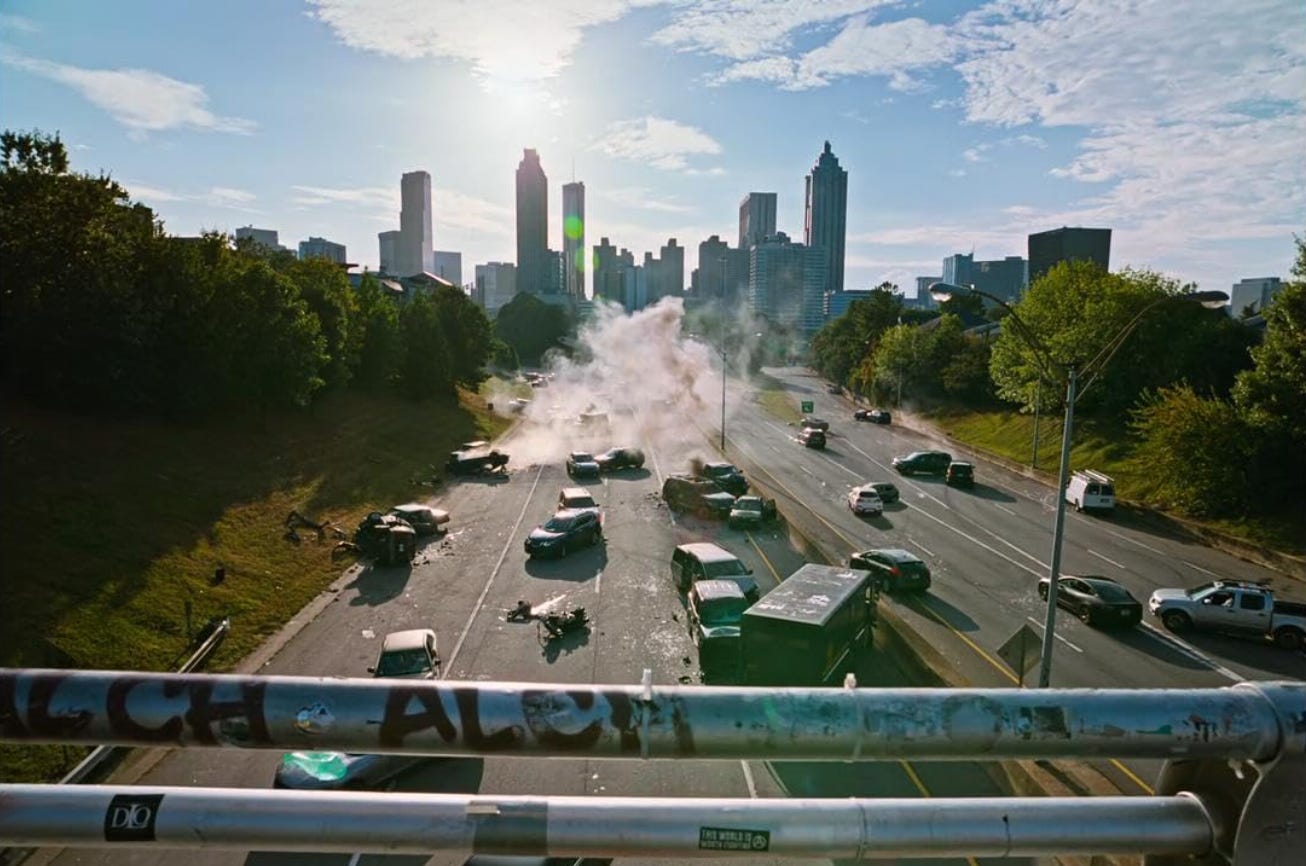
This is the nihilism of liberals unable to envision a world beyond capitalism. Rather than blaming capitalism for the destruction of the environment and working-class communities, they blame humanity as a whole. If you preclude overthrowing capitalism, as liberals do, then the elimination of human beings becomes the only “logical” solution. It’s a disgusting message, regardless of whether the messenger claims their intent was comedic or satirical. To paraphrase Samuel Johnson, the excuse that “it’s only a joke, bro” is the last refuge of a scoundrel.
Lanthimos throws in artsy flourishes like wide shots to emphasize the audience being outside observers, similar to the Andromedans; and surreal black-and-white flashbacks that show the ailing Sandy literally floating away from her son. There are some thuddingly on-the-nose needle drops, like “Basket Case” by Green Day and “Where Have All the Flowers Gone?”; the latter plays over images of dead bodies after the Andromedans decide to off the human race. None of it matters when the movie undercuts its own foundations so badly in the last act.
The ending ruins what was effective about the film in the first place—the conflict between Stone’s CEO and her conspiracy-addled captors. Learning Michelle was an alien makes their interactions less, not more interesting. Stone and Plemons are excellent as always, but even their performances and a few laughs aren’t enough to overcome a script with such a misguided conclusion.