
Fort Apache (1948)

8/10
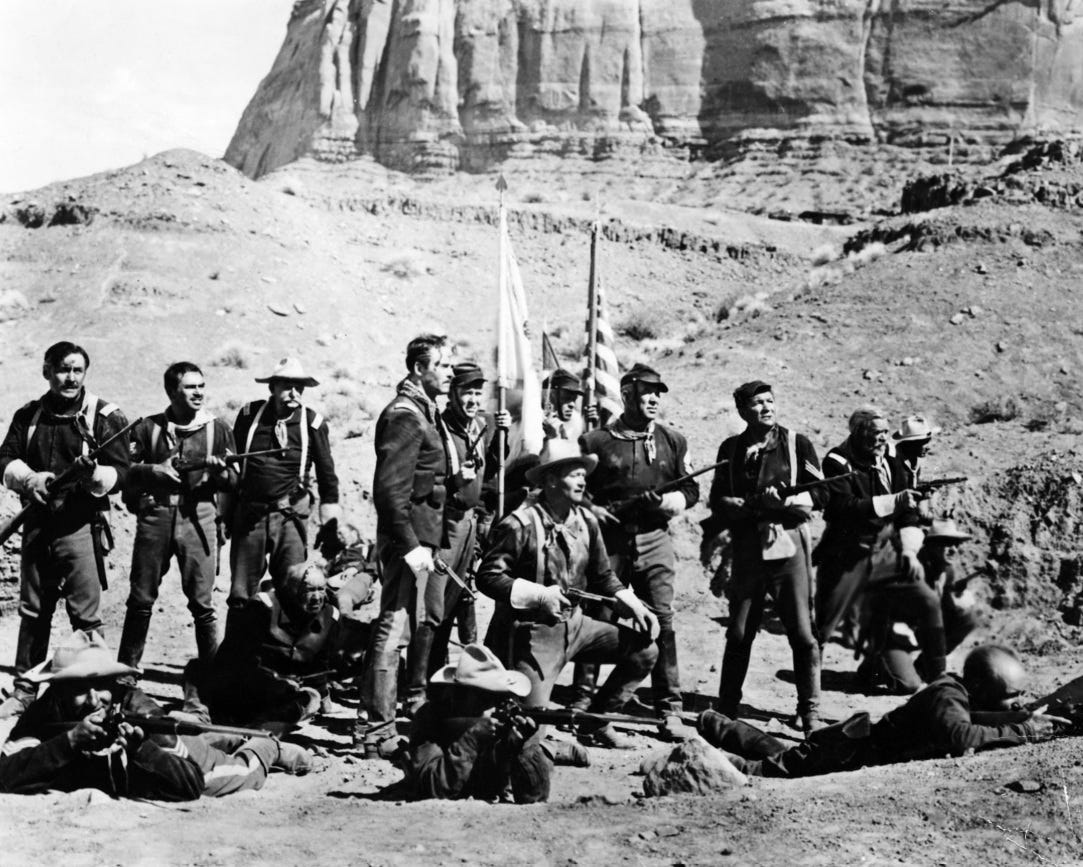
A typically well-crafted John Ford Western, Fort Apache marks a step forward for both director and genre by being one of the first Hollywood films to portray Indigenous peoples of the United States in a sympathetic light. Unlike previous Westerns, including Ford’s own Stagecoach, which depicted Native Americans as merciless savages, Fort Apache encourages the viewer to side with Indigenous resistance against an arrogant U.S. Army officer and corrupt U.S. government officials. The result is a fascinating character study augmented by romantic drama, a pair of impressive battle sequences, and generally high production values.
Lt. Col. Owen Thursday (Henry Fonda) is an ambitious commander embittered by his assignment to Fort Apache, a remote U.S. cavalry outpost along the Arizona frontier. Thursday soon reveals his rigid adherence to military protocol, ignorance of the region, and contempt for the men serving underneath him, disregarding advice of veterans like Capt. Kirby York (John Wayne) who are familiar with the Apache. When his daughter Philadelphia (Shirley Temple) falls in love with 2nd Lt. Michael O'Rourke (John Agar), Thursday forbids her to see him on the basis of rigid classism: Michael is a young West Point graduate but also the son of an enlisted man, and therefore in Thursday’s view unworthy of his daughter’s hand.
Screenwriter Frank S. Nugent drew upon numerous sources for his script, with James Warner Bellah’s short story “Massacre” being the main influence. The story contains numerous parallels to the Battle of Little Bighorn, aka “Custer’s Last Stand,” and the Fetterman Fight. Thursday’s appearance and narrative resemble those of Lt. Howard B. Cushing, who died in 1871 in a battle with the Apache.
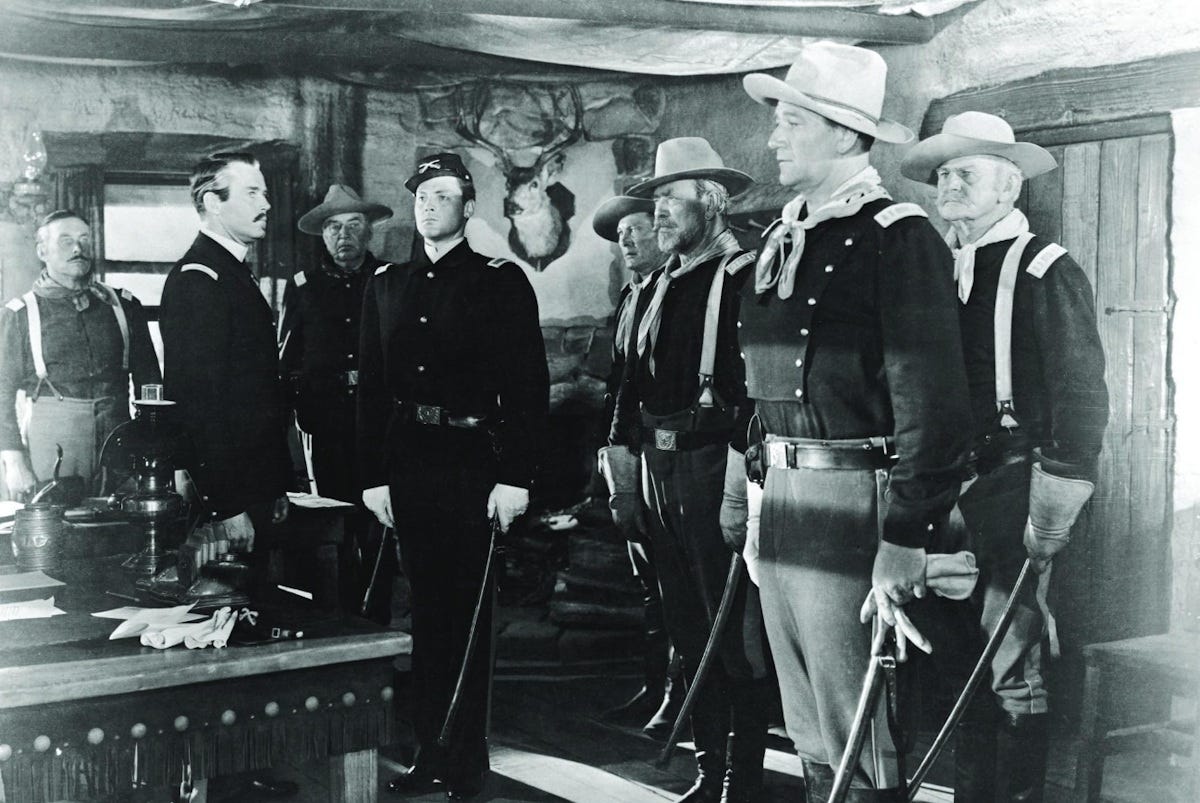
Nugent’s screenplay and Fonda’s performance create a multifaceted character in Thursday. Brevetted as a general in the U.S. Civil War and having served in Europe, his resentment at being posted in what he views as a frontier backwater intensifies his disciplinarian tendencies. Thursday fixates on details of proper dress, treats more knowledgeable subordinates and their feedback with disdain, and derides Indigenous people as uncivilized “savages” and “digger Indians.”
On the other hand, Thursday tells Indian agent Silas Meacham (Grant Withers) that if it were up to him, he would hang Meacham for withholding food and supplies from the Apache and profiting by illegally selling them cheap whiskey and Winchester rifles, fueling malnutrition, alcoholism and social decay on the reservation. As a widower, Thursday has a deep love for his daughter, around whom he reveals a softer side. When he forbids Michael to see Philadelphia, he apologizes to the O’Rourkes for his rudeness. Yet he inflexibly sticks to his elitist principles and refuses to give his blessing to their marriage.
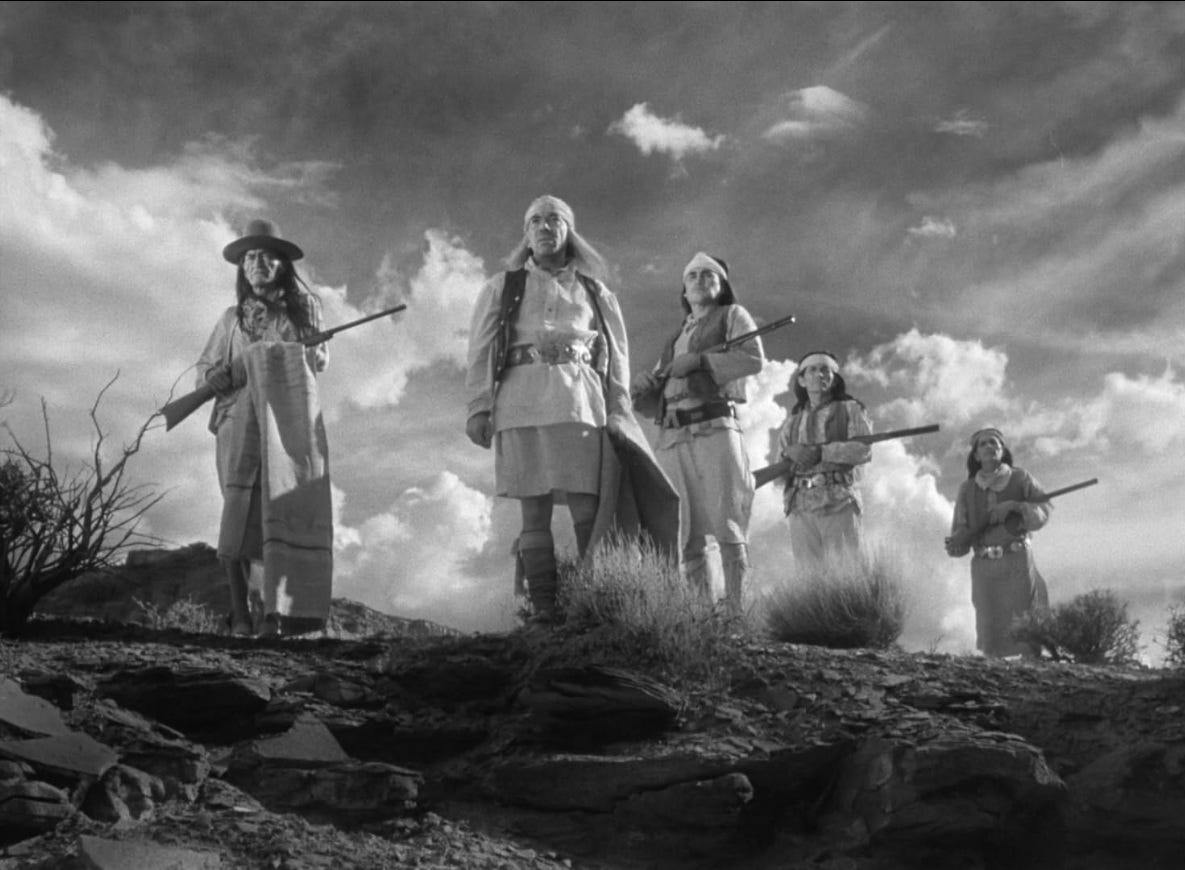
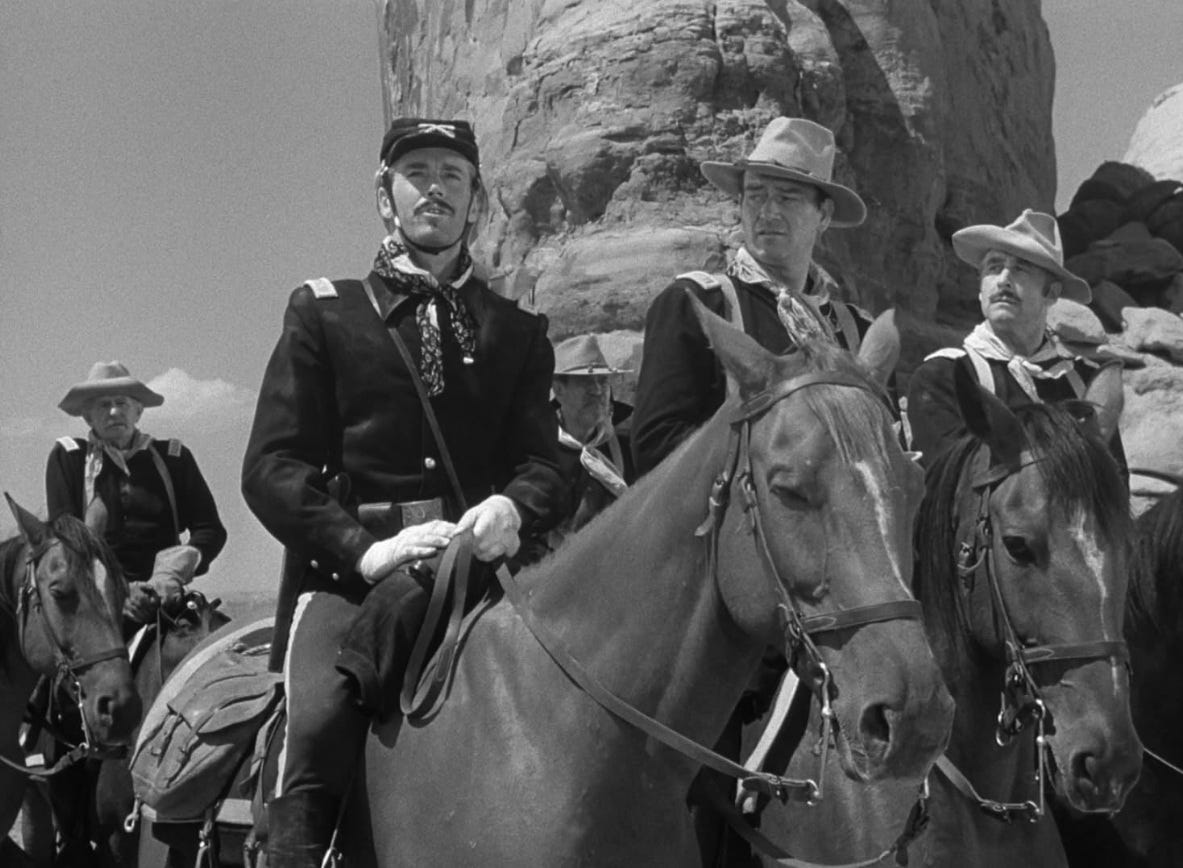
Capt. York provides an interesting contrast to Thursday. The former has come to know the ways of the Apache through his experience in the civil war and shows respect for their culture and the leadership of Cochise (Miguel Inclán), who has moved the Apache into Mexico to flee the hunger and misery of the reservation. York views agreements he makes with Cochise as a matter of honour, while Thursday blithely ignores such commitments to gain military advantage. When Cochise eloquently conveys to Thursday the grievances and war-weariness of his people, but also their determination to fight if necessary, and Thursday threatens to attack, our sympathies are with the Apache, not the U.S. Army. Mild as it may seem today, such a perspective was revolutionary for a Hollywood film in the 1940s.
The conflict with the Apache dominates the second half of the film, whereas the first unfolds at a more leisurely pace in documenting life at Fort Apache, including the arrival of the Thursdays, Michael’s reunion with his parents—his father Sgt. Maj. Michael O'Rourke (Ward Bond), the fort’s ranking non-commissioned officer, won the Medal of Honor fighting with the Irish Brigade—and the romance between Philadelphia and Michael. Their love story is only passably interesting, despite the fact Temple and Agar were married at the time. Drilling new recruits provides comic relief, while a dinner party offers an enjoyable musical interlude with Sgt. Quincannon (Dick Foran) singing the 1860s ballad “Sweet Genevieve.”
Events pick up speed in the third act as Thursday’s ego and desire to secure the return of the Apache to their reserve set the stage for an all-out confrontation. Although Ford’s crew filmed many exterior shots in Monument Valley, Utah, scenes in the first half with characters on stagecoaches and horseback appear phony with actors delivering their lines in front of obvious rear-projection backgrounds. Thankfully, in the final act all scenes including dialogue on horseback are shot outdoors.
Battle scenes between the U.S. military and the Apache are exciting and well-filmed, despite being historically inaccurate. Contrary to the film’s depiction, the Apache did not engage in large-scaled mass battle tactics at this time, instead adopting a strategy closer to guerilla warfare. Greater attention to period detail is evident in the costumes and production design, from formal dance parties that show the social hierarchies and leisure activities of frontier life to shots of U.S. cavalry riding into battle that resemble vintage photographs.
Fort Apache is moderate by today’s standards in terms of sympathizing with Indigenous people and questioning narratives such as manifest destiny that justified their genocide, dispossession, and subjugation. But for fans of classic Hollywood Westerns, it’s refreshing to see Ford—one of the genre’s greatest directors—adopt a more enlightened perspective than the backward, “good cowboys versus savage Indians” view he presented less than a decade before in Stagecoach. The film’s relatively progressive politics and rich character focus on Thursday and York elevate more pedestrian aspects such as the romance between Philadelphia and Michael, which is fairly by the numbers.
The end of the film highlights a disconnect between how history is remembered and what actually occurred. It’s a good reminder of how the ruling ideas in any epoch are the ideas of the ruling class, which will portray villains as heroes and vice versa to advance their interests. Consider the falsification of history around the Native American victory at Little Bighorn, which saw the transformation of Gen. George Custer—whose troops had slaughtered Indigenous women, children and elders and whom Sioux author Vine Deloria Jr. later compared to Nazi SS officer Adolf Eichmann—into a tragic hero. The establishment of American capitalism and imperialism required the extermination of Indigenous peoples. Dominant historical narratives therefore portrayed Indigenous people as “savages” and glorified those who aimed to subjugate or kill them.
Fort Apache, despite inaccuracies regarding Apache battle tactics and the like, implicitly condemns this more significant falsification of history. The way characters describe Thursday at the end has little in common with the person we have just seen. Yet even those who know the truth—including someone hostile to the glorified individual—may refuse to challenge false narratives if they benefit from upholding the lie due to class interests, personal ambition or self-preservation.