
Obsession (2025)

10/10
Somehow I managed to avoid any spoilers before watching Obsession. That’s a small miracle considering this movie has become such a phenomenon, nearly every scene has been turned into meme fodder for TikTok and Instagram. I’d heard its premise was reminiscent of The Twilight Zone, which is true, but with its R rating the movie goes harder than any early ’60s TV show could. This is the best “be careful what you wish for” story I’ve ever seen.
Effective horror plays on universal fears and desires. Writer-director Curry Barker starts with a relatable human impulse: for the person we love most to love us back. As genre fiction such as horror is uniquely capable of doing, he pushes that concept to an extreme, where one man’s wish fulfillment becomes a living nightmare. Barker’s stellar direction creates consistent tension. His script is willing to go extremely dark and delve into serious issues such as consent. Yet he also finds self-aware black comedy in the situation that breaks the tension with genuinely funny moments.
As with many horror movies, Obsession is most effective if you know as little as possible going in. The film follows Baron “Bear” Bailey (Michael Johnston), a music store employee with an all-consuming crush on his friend and co-worker Nikki Freeman (Inde Navarrette). Awkward around Nikki and fumbling any chance to ask her out or express his true feelings, Bear impulsively uses a novelty toy he bought called a “One Wish Willow” to wish that Nikki would love him more than anyone else in the world. Terrifying consequences ensue.
The film’s portrayal of Bear is ambiguous. While we might have compassion or pity for his unrequited feelings and inability to express them, Barker establishes Bear’s behaviour as pathetic, cowardly and cringe-worthy, since he can’t admit his feelings to Nikki even when she gives him a chance and asks him straight out if he likes her. Instead, Bear makes a wish that would remove any need for action on his part by making Nikki fall in all-consuming love with him.
Spoilers ahead.
Nikki’s behaviour changes immediately after Bear makes his wish. Now she’s the one who acts nervous, uncomfortable and needy around him. Bear overlooks some giant red flags, like Nikki making a memorial with the remains of his dead cat, and the two begin dating. Co-workers are baffled by the two’s sudden intense romance and Nikki’s infatuation with Bear, since she earlier said she merely saw him as a “little brother.” Yet even by the end of a montage showing happy scenes of the couple together, Bear appears bored with the relationship he had wanted more than anything. Nikki, however, is now incapable of focusing on anything other than Bear.
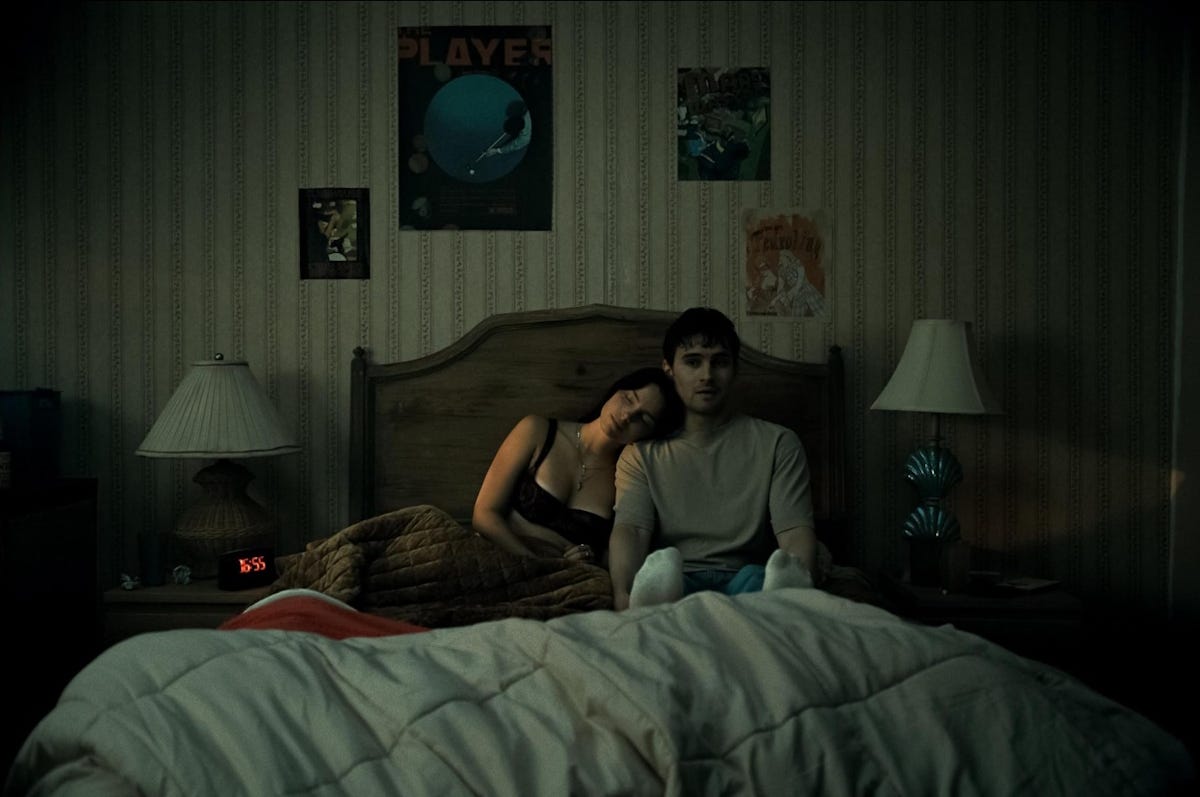
The most disturbing implication of the film is that the “real” Nikki is still trapped inside the “wish Nikki” who obsessively loves Bear, and is aware of what’s going on around her. In a scene where they have sex—which many viewers interpret as rape due to “real Nikki’s” lack of consent—Nikki moans but stares vacantly into the distance, as if she’s not really there. Barker makes her absence explicit in a scene where Bear calls One Wish Willow customer support. The person on the other line asks if he wants to talk to the “real Nikki,” and we hear her screaming. Essentially, Nikki has lost the use of her body which Bear is using without her consent.
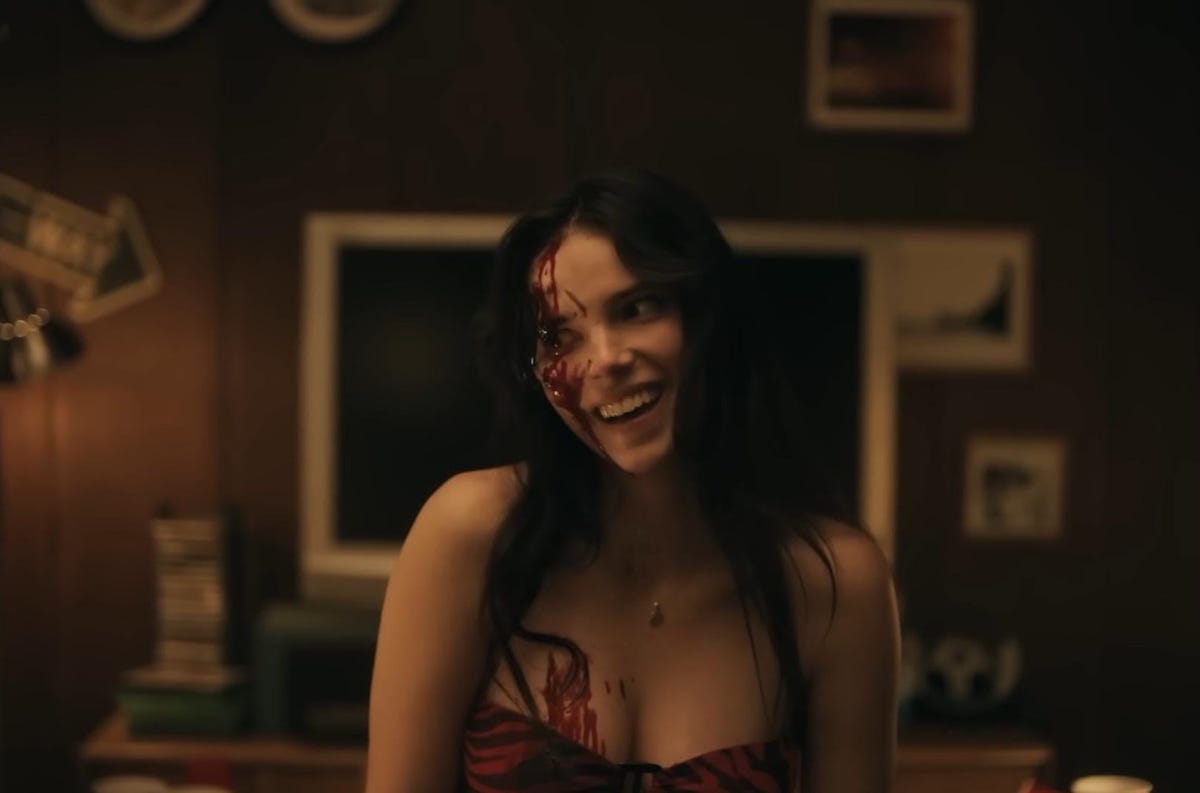
Nikki’s obsession with Bear becomes more and more disturbing, albeit blackly comic when she covers the inside of the front door with duct tape to prevent him from leaving for work. After he leaves, she stands there staring at the door, waiting for him to return and urinating on the floor with a frozen smile on her face. It’s incredibly creepy, a visual expression of Bear’s desire for Nikki to adore him more than anything else, and what that would literally mean. She has stopped being a human being with her own interests, existing only to serve and worship Bear. She embodies the patriarchal ideal of the oppressed woman as an adoring, willing slave of the man.
Of the performances in Obsession, Navarrette’s has been singled out for particular acclaim, and she deserves the praise. At various points, she creates the impression of “real Nikki” struggling to get out. In one scene, when “wish Nikki” is asleep, we hear the voice of the real Nikki asking Bear to kill her. Revealingly, even after he’s become terrified by her bizarre behaviour and disenchanted knowing that her love for him isn’t real, Bear takes offence that Nikki would rather die than be with him. His attitude towards Nikki is guided by a desire for control over her.
Obsession is a “Gen Z movie” to the extent that a majority of ticket buyers, 75 per cent, are between the ages of 18 and 25. The way the characters use smartphones, social media and the internet reflects the dominance of those things in our culture in a way I haven’t seen in a lot of movies. Clearly the film’s subject matter appeals to this demographic, dealing with dating and romance among young friends and co-workers.
For all its relevance to contemporary young audiences, Obsession has parallels to vintage Michael Douglas thrillers like Fatal Attraction or Disclosure, in which woman stalk or sexually harass men. The vast majority of gender-based violence involves men targeting women, but for mainstream studios or audiences in the 1980s and ’90s, it was evidently more palatable to portray a man as the victim of a woman. In Fatal Attraction, Douglas’s character has an extramarital affair with Glenn Close, who is deranged and obsessed with him and targets his family. The film directs our sympathy towards Douglas, even though he was at fault for cheating on his wife in the first place and throwing Close’s character away like trash.
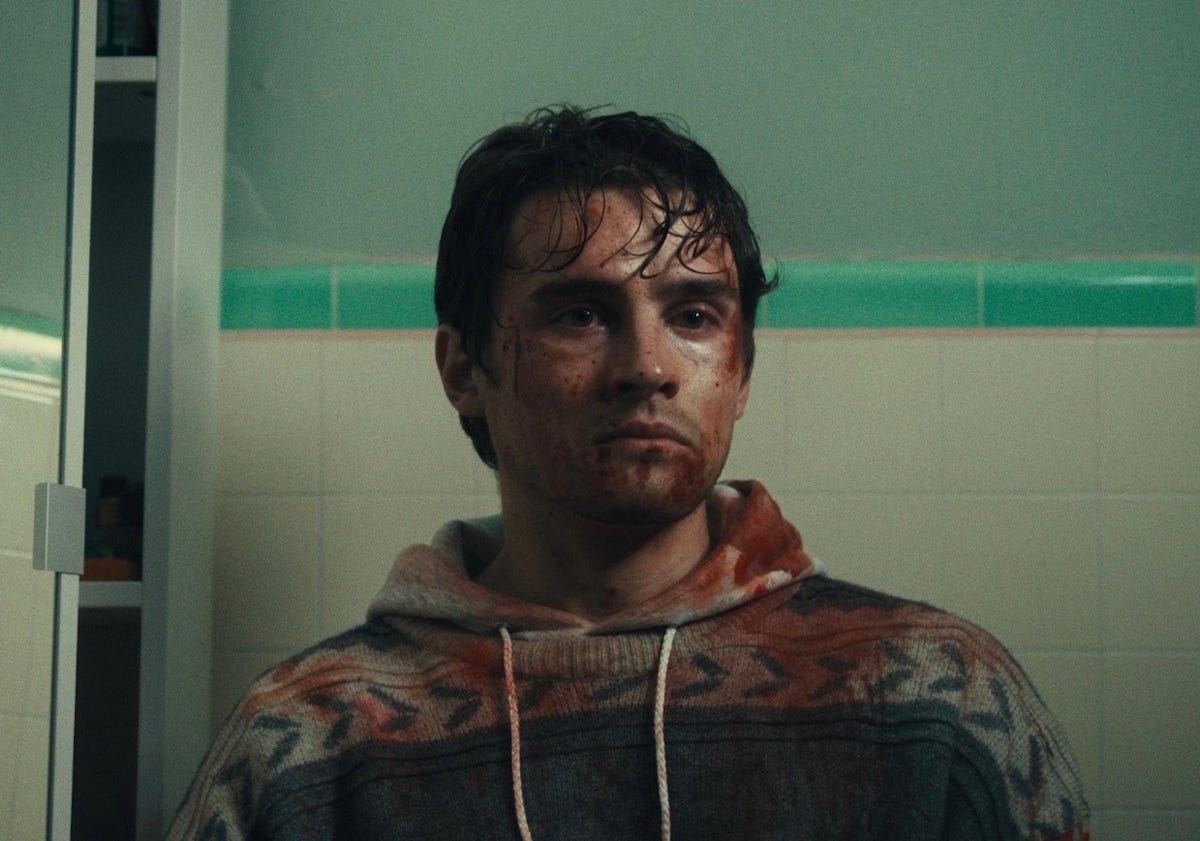
Similarly in Obsession, when Nikki’s obsession with Bear becomes violent and terrifying, our impulse can be to sympathize with him, as when he wants to go to a “boys’ night out” and she insists on tagging along, with horrific results. Unlike in Fatal Attraction, it’s more clear here that the male lead is responsible for the calamity that befalls him. Barker reportedly declined a $2-million offer to rewrite the script to make Bear more heroic, which was the right call. Johnston’s performance and the fact that the story is told through Bear’s eyes help make the character empathetic at times, but we understand that he is a deeply flawed character whose desires, even if inadvertently, have denied Nikki control over her very self.
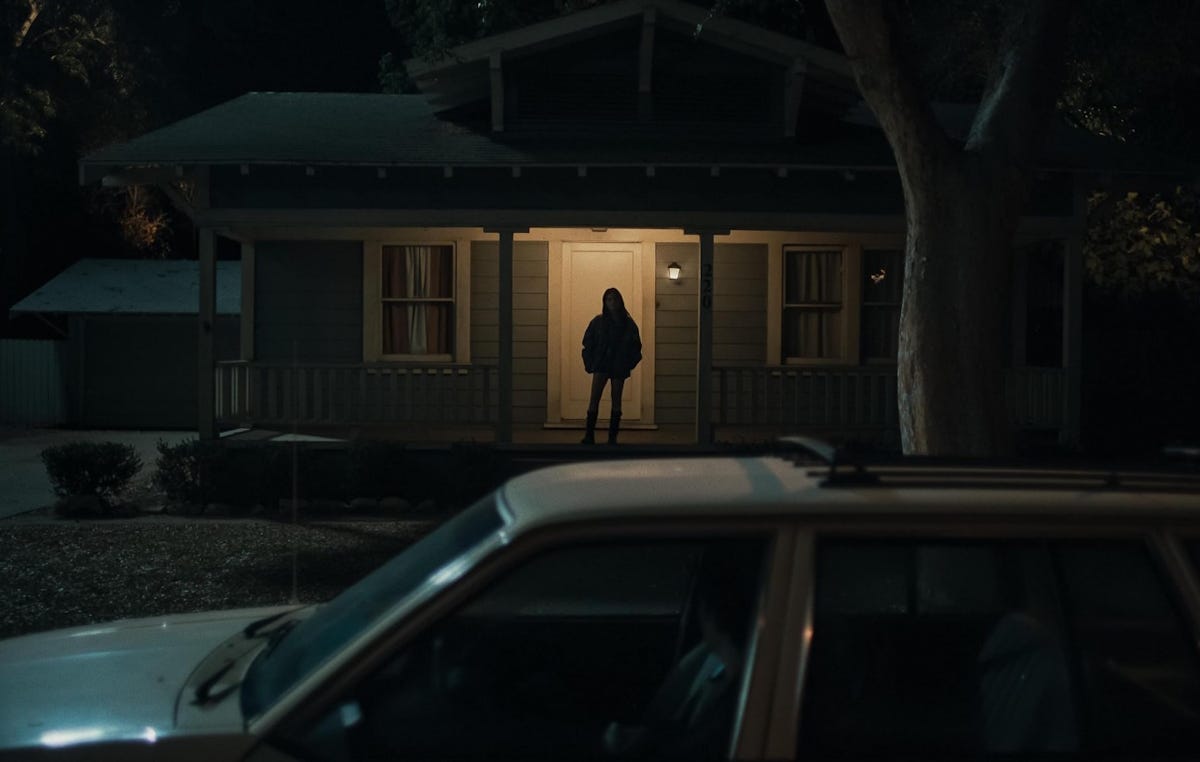
In many scenes, Barker shoots Navarrette in darkness where we can’t see her face. While poor lighting has been a consistent problem in movies in recent years, here it’s intentional, since Johnston’s face is lit clearly in the same scenes. Nikki’s body is present, but her true personality isn’t there; Bear can’t really see this woman that he put on a pedestal. We feel that Nikki is possessed by some supernatural force, an effect augmented at times by prosthetics and makeup or by Navarrette’s unsettling body movements. Rock Burwell’s brooding synth score further contributes to the eerie atmosphere that pervades the film.
Violence is relatively rare in Obsession, but when it happens it’s visceral and shocking, especially one kill in particular (you’ll know it when you see it). More prevalent is the film’s sense of dark humour, often when characters ask the same questions that viewers might about the “rules” of the One Wish Willow. Barker has a memorable voice role as the disinterested-sounding customer service representative who answers when Bear calls to ask whether he can reverse or cancel a wish.
Along with Backrooms, which I have yet to see, Obsession —which has grossed $371 million to date off a budget of $750,000—has struck a chord as a buzzy original horror film proving massively popular at the same time as mega-expensive superhero movies and ’80s nostalgia ploys are failing at the box office, overturning a business model Hollywood has relied on for decades. Watching it felt like I was seeing a sea change in the industry, representative of audiences that are desperate for something new—particularly Gen Z, who are now the most active moviegoing demographic and want films that speak to their experiences.
Obsession gave me everything I want in a horror film, with great performances, dark humour, atmospheric direction and music, and a resonant story that left me thinking long after I’d left the theatre. If this is the future of Hollywood I’m all for it.