
Rio Bravo (1959)

9/10
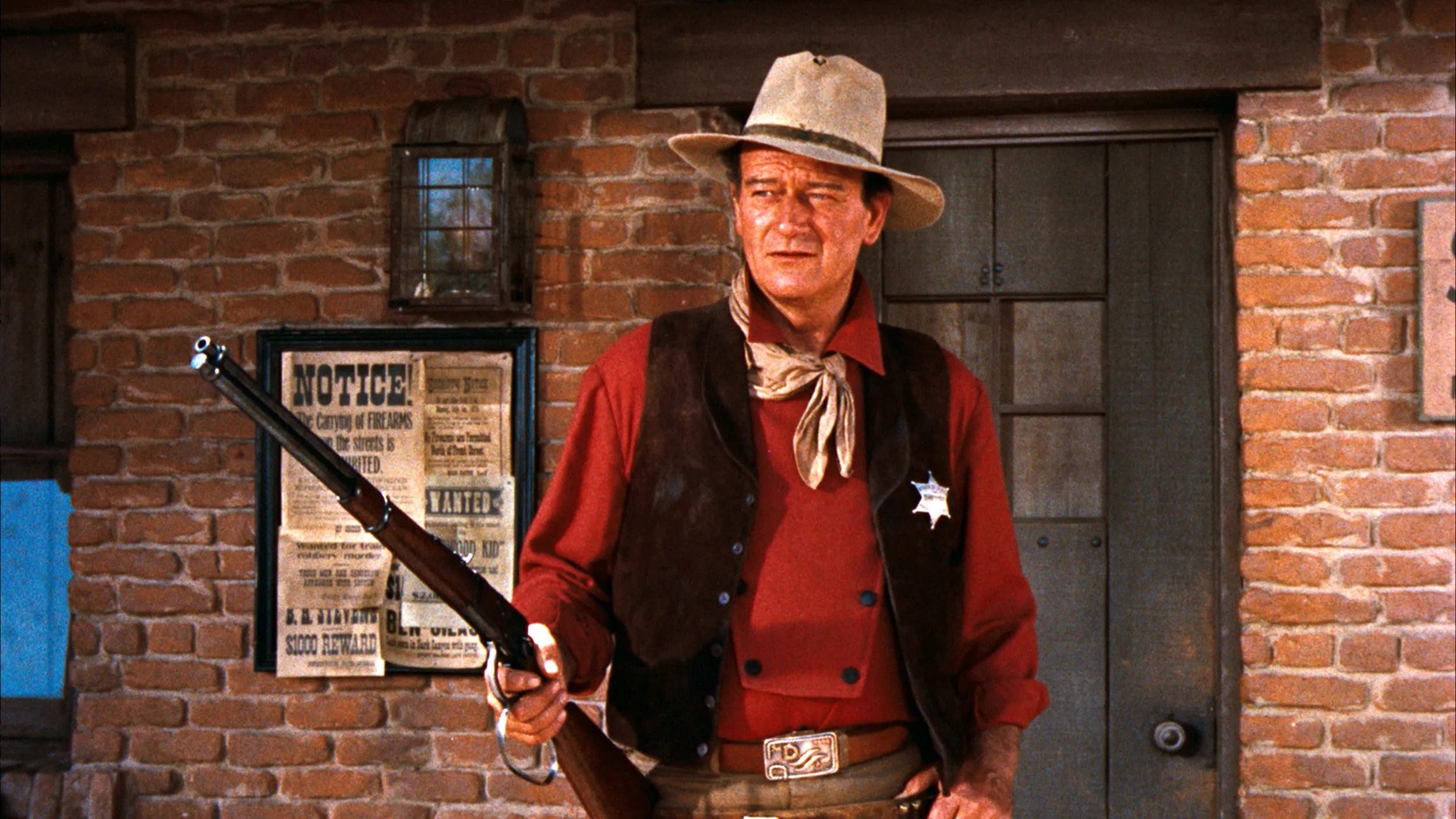
My expectations for Rio Bravo were coloured by descriptions that it focused on a core group of characters in a sheriff’s office holding off an assault by hostile forces, which inspired the likes of John Carpenter’s Assault on Precinct 13. In fact, the movie isn’t nearly as claustrophobic and tense as that description makes it sound. What it is is a superior example of the classical Hollywood Western, whose strength resides first and foremost in its characters and performances, inventive sequences such as the dialogue-free opening, and some wonderful music.
Quentin Tarantino, who has made some good movies but appears to genuinely suck as a person, has called Rio Bravo his “favourite ‘hangout’ movie” and plays it for dates to determine whether or not there will be any relationship. “Hangout movie” turns out to be a surprisingly apt term for Rio Bravo. The movie clocks in at a lengthy 2 hours and 21 minutes, and its pace is unhurried, yet at no point does it ever drag or feel boring. Our attention remains on the screen thanks the charisma of the actors, the way their characters are written, and the expert direction of Howard Hawks.
Take that long opening scene, which starts with town drunk Dude (Dean Martin) entering a saloon looking sweaty, unshaven, and uncomfortable. Martin’s performance is the best part of the movie. Hawks deserves a lot of credit for getting it out of him. The crooner had what author Paul Simpson called a modest talent for acting, but also plenty of natural charisma. In that regard, he was similar to co-star John Wayne. Unlike later Martin star vehicles like the Matt Helm series, where he simply played some version of himself—or at least his public image as a laidback, womanizing boozehound—here he portrays an actual, compelling character.
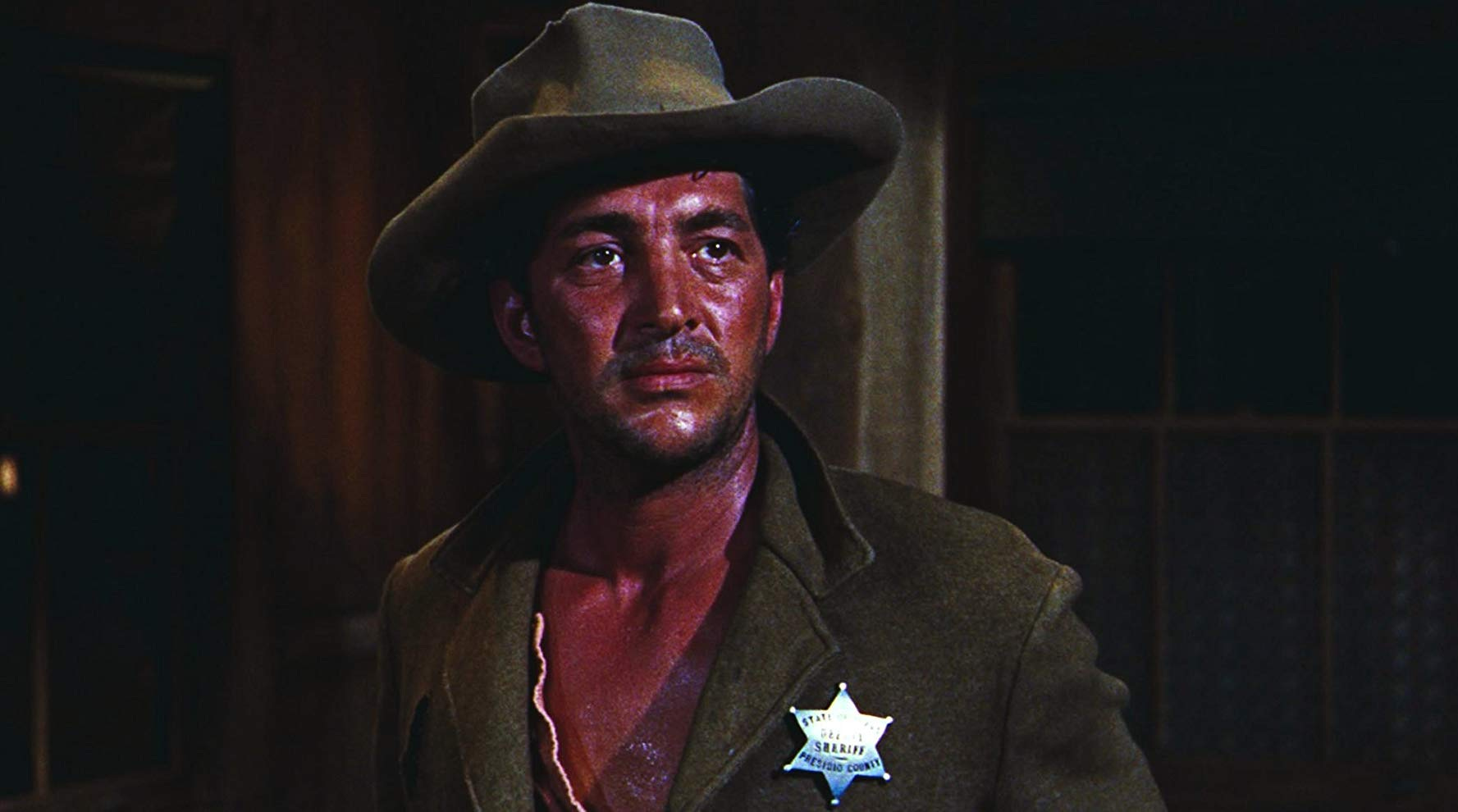
Dude, an on-and-off deputy sheriff, fell into alcoholism after a bad experience with a woman. He spends the movie trying to avoid relapsing. Yet Sheriff John T. Chance (John Wayne) vouches for Dude, saying that sober, no one is better with a gun. One of the recurring pleasures of Rio Bravo is seeing Dude consistently validate Chance’s faith and confound people’s low expectations of him, most memorably during a scene that involves blood dripping into a glass of beer. But we don’t know any of this context or who the characters are the first time we see this opening scene, which culminates in a murder that sets the whole plot in motion.
The killer is Joe Burdette (Claude Akins), whom Chance arrests for murder. Joe is the brother of wealthy land baron Nathan Burdette (John Russell), whose men are determined to free him from jail in the sheriff’s office. The only thing standing in their way is Chance, Dude, the elderly and disabled Stumpy (Walter Brennan), and youthful gunslinger Colorado Ryan (Ricky Nelson).
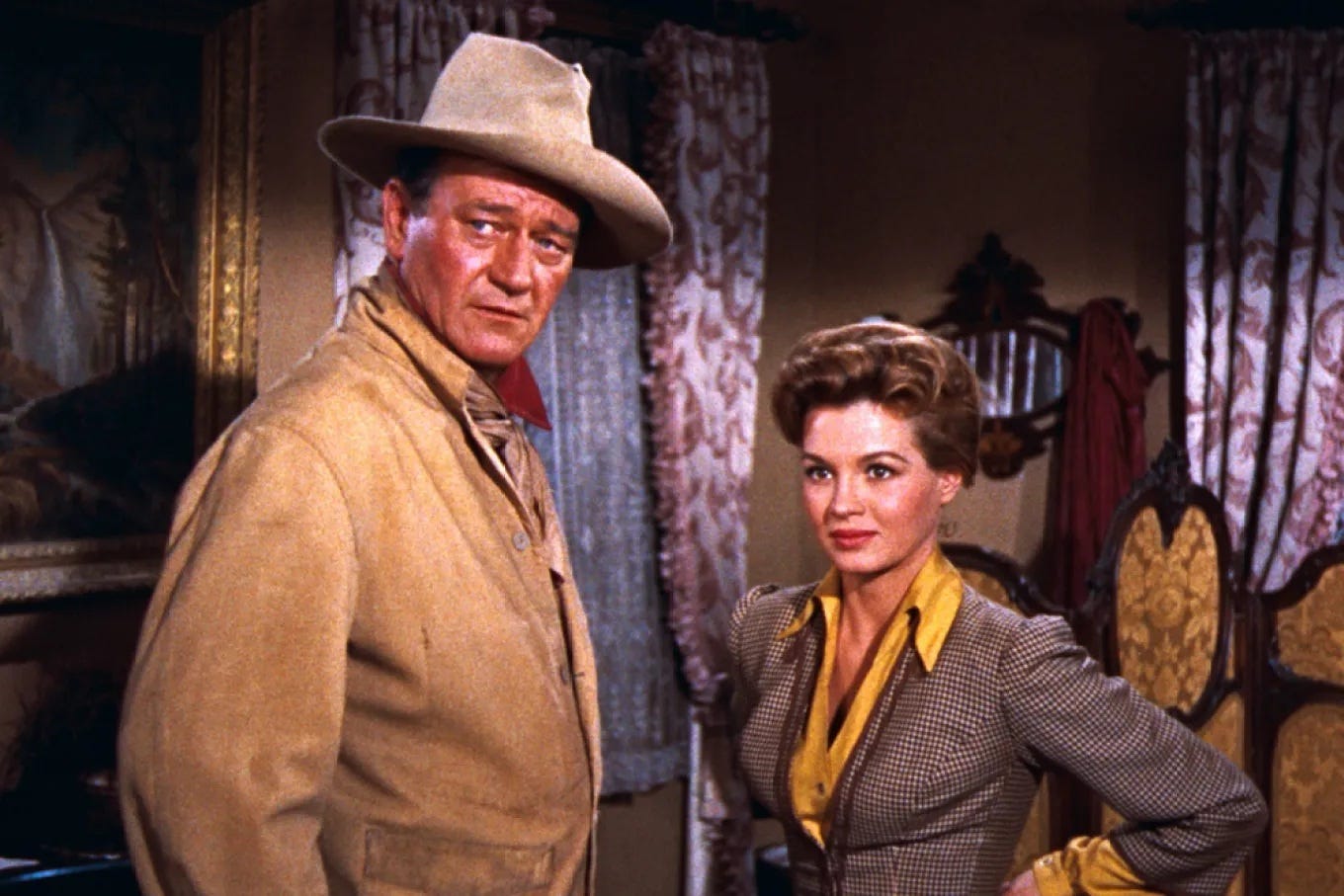
Rio Bravo is in no hurry to reach a resolution. The movie unfolds at a leisurely pace, giving us time to get to know the characters and their relationships. John Wayne does his usual thing, and does it well. He plays the taciturn Western hero, who consistently turns down offers from people who want to help because he doesn’t want them to get hurt—which makes his faith in Dude all the more remarkable. Chance develops a romantic relationship with “Feathers” (Angie Dickinson), widow of a murdered gambler. The two actors have nice chemistry, even if Dickinson’s main role in the story is simply to play “the girl” and serve as a love interest.
The movie’s dialogue is smart and often funny. Unfortunately, the comic relief characters are played a bit too broad. Despite Brennan being a three-time Academy Award winner, his portrayal of Stumpy is marred by the high-pitched, reedy voice he affects, which makes Stumpy feel like a caricature of a “quirky” character who belongs more in a children’s cartoon. At least Stumpy gets some good lines.
Local hotel owner Carlos Robante (Pedro Gonzalez Gonzalez) is more annoying than anything else. To be fair to Gonzalez Gonzalez, whose comic relief performances were often accused of perpetuating negative stereotypes of Hispanic men, this wasn’t his fault, but more the result of the limited, stereotypical roles Hollywood offered minority actors at the time.
On the other hand, one of the more welcome surprises of Rio Bravo is its great music, which—reflecting the film’s Texas setting near the Mexican border—incorporates Hispanic influences into its Western frontier themes. Composer Dimitri Tiomkin often includes trumpets, marimbas and Mexican guitars, most notably when Nathan has saloon musicians play the Mexican march “El Degüello”, aka “The Cutthroat Song”, to signal that defenders of a position will receive no quarter.
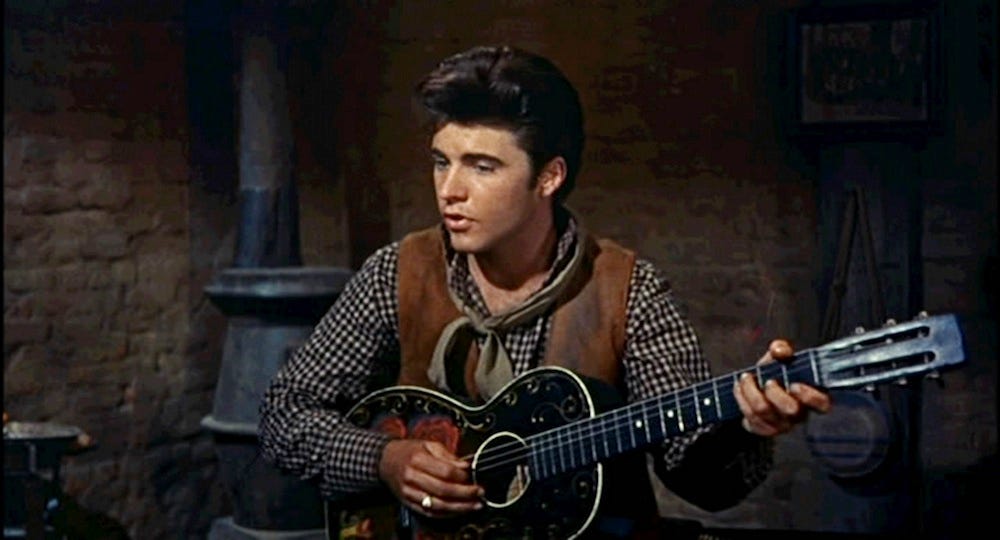
Hawks takes advantage of the fact that his top-billed stars include both a crooner and rock ‘n’ roller by having Martin and Nelson—the latter of whom delivers a solid supporting turn—sing a few songs during a lull in the action at the sheriff’s office. With Nelson on guitar, the two duet on “My Rifle, My Pony and Me”, and Nelson sings the folk song “Cindy” with Stumpy joining in on harmonica. The scene doesn’t advance the plot in any way, but adds to the movie’s welcome hangout vibe. Martin also sings the title song “Rio Bravo” over the end credits.
Given the conventions of the Western genre, it’s probably not a spoiler to say Rio Bravo ends with a climactic shootout. Hawks executes this one well and adds a unique twist by incorporating dynamite, though the heroes’ marksmanship is so excellent it strains credulity. All in all, if you’re looking for an enjoyable old-school Western, Rio Bravo is one of the better examples I’ve seen.