
Train Dreams (2025)

7/10
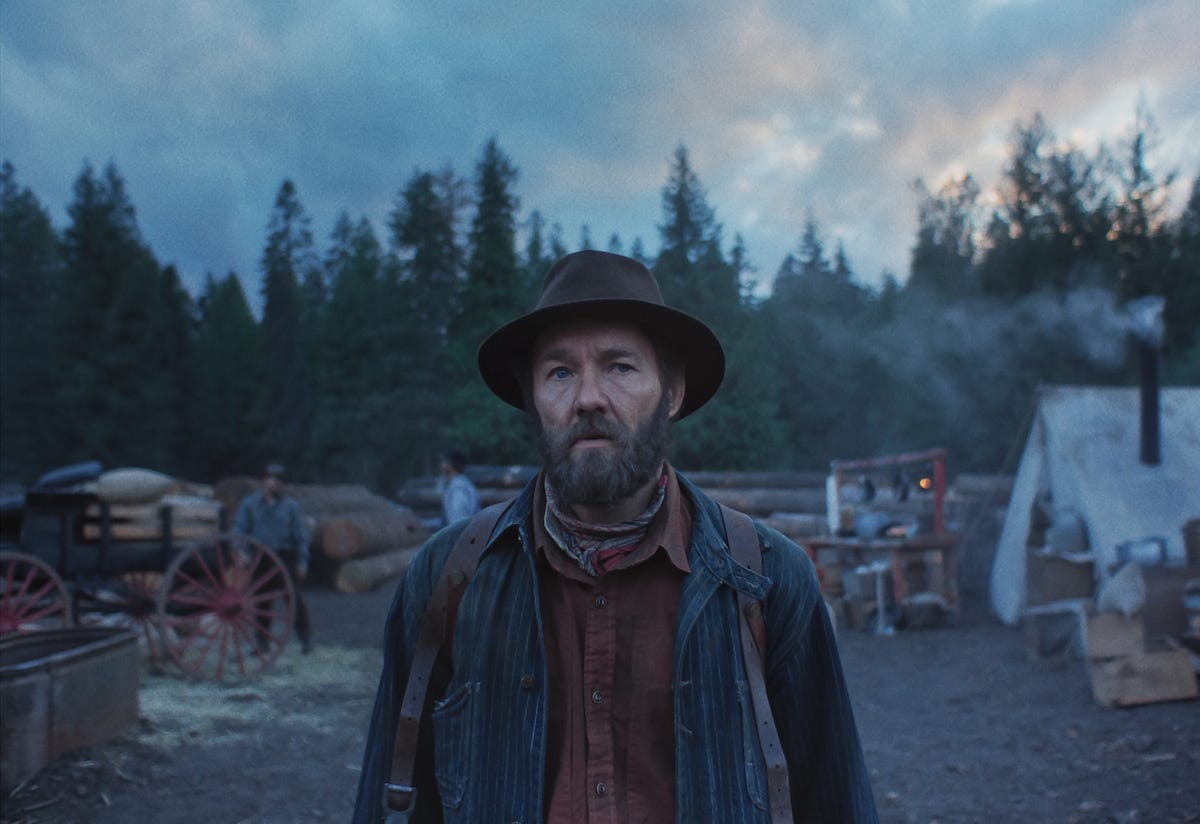
Films that focus on workers are surprisingly rare in Hollywood. Train Dreams is exceptional in that sense: a period piece that follows a quiet, ordinary man in rural Washington state who works variously as a logger, railroad worker and carriage driver while grappling with personal loss and the passage of time. Director Clint Bentley, who co-wrote the screenplay with Greg Kwedar based on a novella by Denis Johnson—voiceover narration throughout betrays its literary origins—fumbles character development in some key areas, but the film looks beautiful and is often poignant.
The story takes place mainly in the early 20th century. Robert Grainier (Joel Edgerton) grew up as an orphaned child, sent to the area around the Great Northern Railway. Dropping out of school, he works as a logger but is otherwise aimless until he meets Gladys Olding (Felicity Jones). The two marry and have a daughter, Kate, eventually building and moving into a log cabin in Idaho. Robert’s work takes him away from home for long periods of time. He and Gladys plan to turn their home into a farm and build a lumber mill, but life disrupts their plans.
I won’t reveal anything more about the plot. Before watching I made the mistake of reading the introduction to the Wikipedia entry for Johnson’s novella, which reveals key plot details (apparently some people still don’t understand the concept of spoilers). That made the movie less impactful than it should have been. Train Dreams has garnered rave reviews by critics who found it a profound meditation on life, but part of life is not knowing what will happen in the future. Do not spoil key plot details when introducing what a work of fiction is about. I can’t stress this enough.
Spoilers aside, my biggest problem with Train Dreams is how quickly it passes over the courtship between Robert and Gladys. Given that their relationship is the foundation of the film, we needed more time to see them falling in love, which also would have better fleshed out each character. Their relationship feels perfunctory as a result, which is not what you want from a drama where the main character’s chief motivation is his relationship to his wife and child.
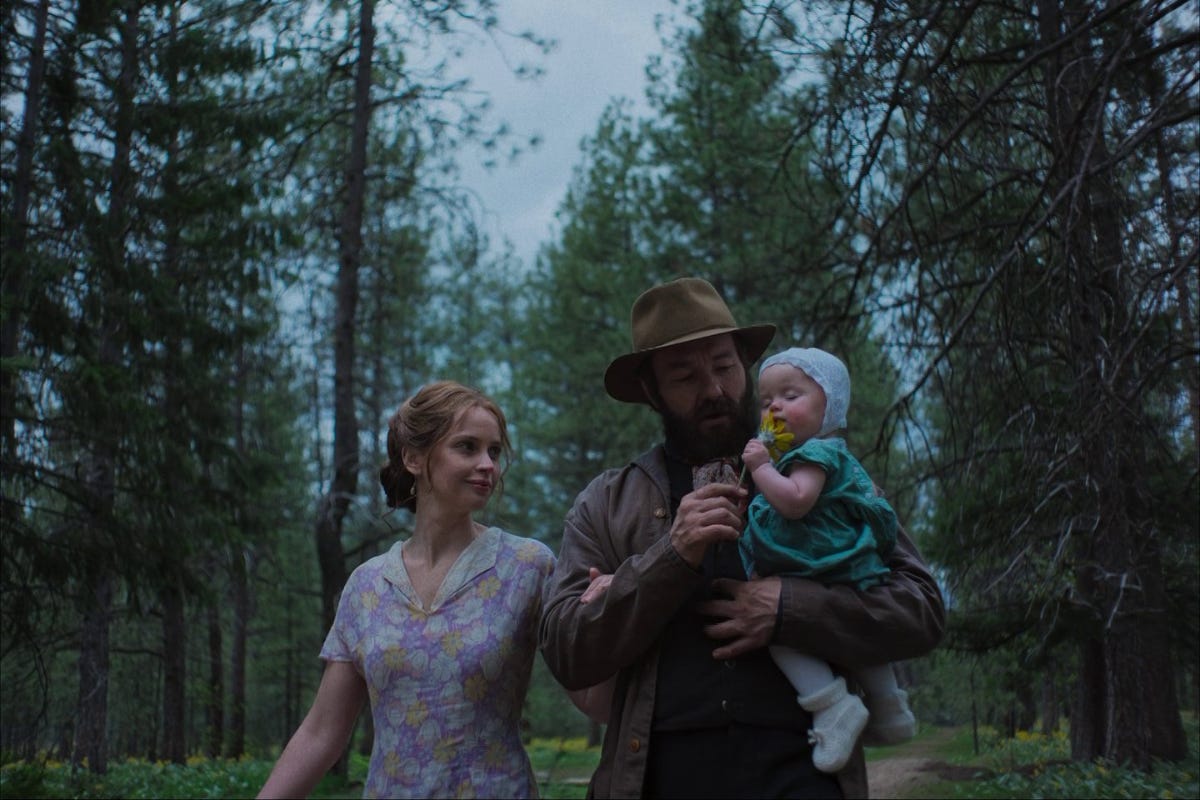
Character development is sufficient for the movie to work. To be fair, Gladys has a stronger personality than Robert in their scenes together: she’s the one who approaches him when they first meet, and puts forward the idea of turning their land into a farm. Robert is a mild-mannered man who doesn’t express emotions easily, but over the course of the film we get to know him through his reactions to events. Edgerton’s performance sells those rare moments when Robert reveals his feelings. Narration by Will Patton explaining the character’s emotions just makes it clear this story was adapted from a book and is arguably unnecessary.
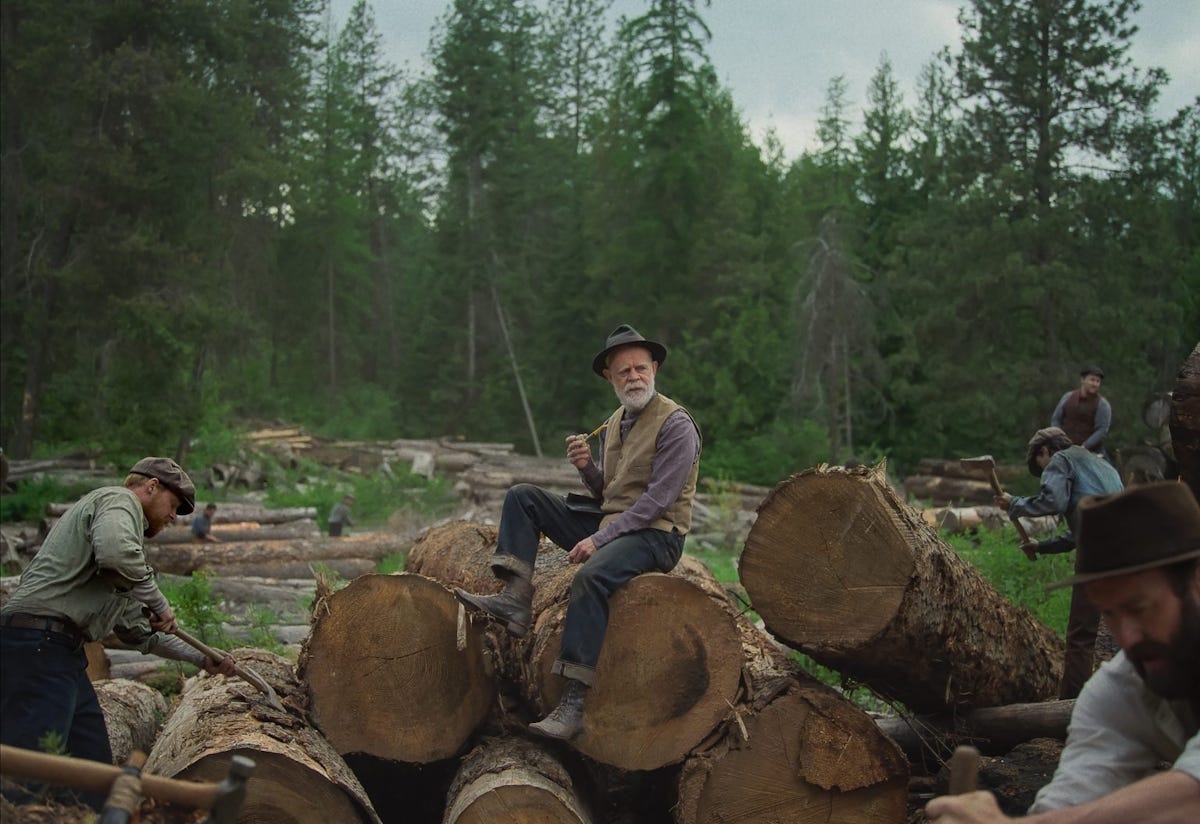
Train Dreams is most effective in depicting characters’ reactions to the changing world around them. Shooting on location in Washington state, Bentley and cinematographer Adolpho Veloso capture gorgeous scenery of forests and rivers with stunning, painterly shots using natural lighting. One of the most powerful scenes is one of its most understated: elderly logger Arn Peeples (William H. Macy) sits in a forest and gazes around him at the trees, sun and sky. “Beautiful, ain’t it?” he says. “What is?” Robert asks. “All of it,” Arn responds. “Every bit of it.”
Arn is one of the more interesting characters in the film, sharing wisdom he’s accumulated over the years. When Robert asks if “the bad things that we do follow us through life”, Arn says he doesn’t know: “I've seen bad men raised up and good men brought to their knees.” Most interesting from an ecological perspective is when Arn says cutting down 500-year-old trees “upsets a man’s soul.” A younger logger says he’s just happy to get paid, that “there’s enough logs for us to cut for 1,000 years” and when all the trees are gone, they can quickly regrow new ones. “I remember thinking the same thing when I was a young man,” Arn says. These scenes are very relevant at a time when old-growth forests are under attack from a forestry industry looking to make quick profits.
How an individual responds to new technology and changing economic conditions is a recurring theme. Like every member of his class, Robert possesses only his ability to work and therefore goes wherever the work is. He works in railroad construction or logging, depending on the needs of the U.S. capitalist economy, such as during the country’s involvement in World War I. He ends up working far from home for long periods of time and misses his daughter growing up, lamenting that every time he sees her, she seems like a different person.
Robert’s early work as a logger involves the use of manual, human-powered saws. The work can be dangerous, as we see multiple loggers dying on the job. Deaths he witnesses also include what appears to be an ugly instance of anti-Chinese sentiment, which haunts Robert afterward. In later years, when Robert tries to return to logging, he feels out of place using newer tools such as chainsaws and being surrounded by younger workers who are more comfortable using such tools.
Moving at an unhurried pace, Train Dreams invites us to reflect not just on how we process trauma, but on the more mundane experiences of life with all its ups and downs. Bryce Dessner’s elegiac score is effective in conveying that story; Nick Cave’s end credits song, not so much. Despite some underwritten characters, the film strikes a relatable emotional chord that makes it a worthwhile experience.
Like a lot of adaptations, the director seemed concerned chiefly with hitting the novella's various plot checkpoints. The novella has a cumulative power that can't really translate to film, even one that uses the occasional omniscient voiceover.
Stories about inarticulate, emotionally closed men like Train Dreams or The Shipping News or Blood Meridian work when they're novels or novellas because we can access their interiority, whereas with films you often get awkward voiceovers attempting to convey profundity.
I liked it but it couldn't come close to the majesty of the novella.